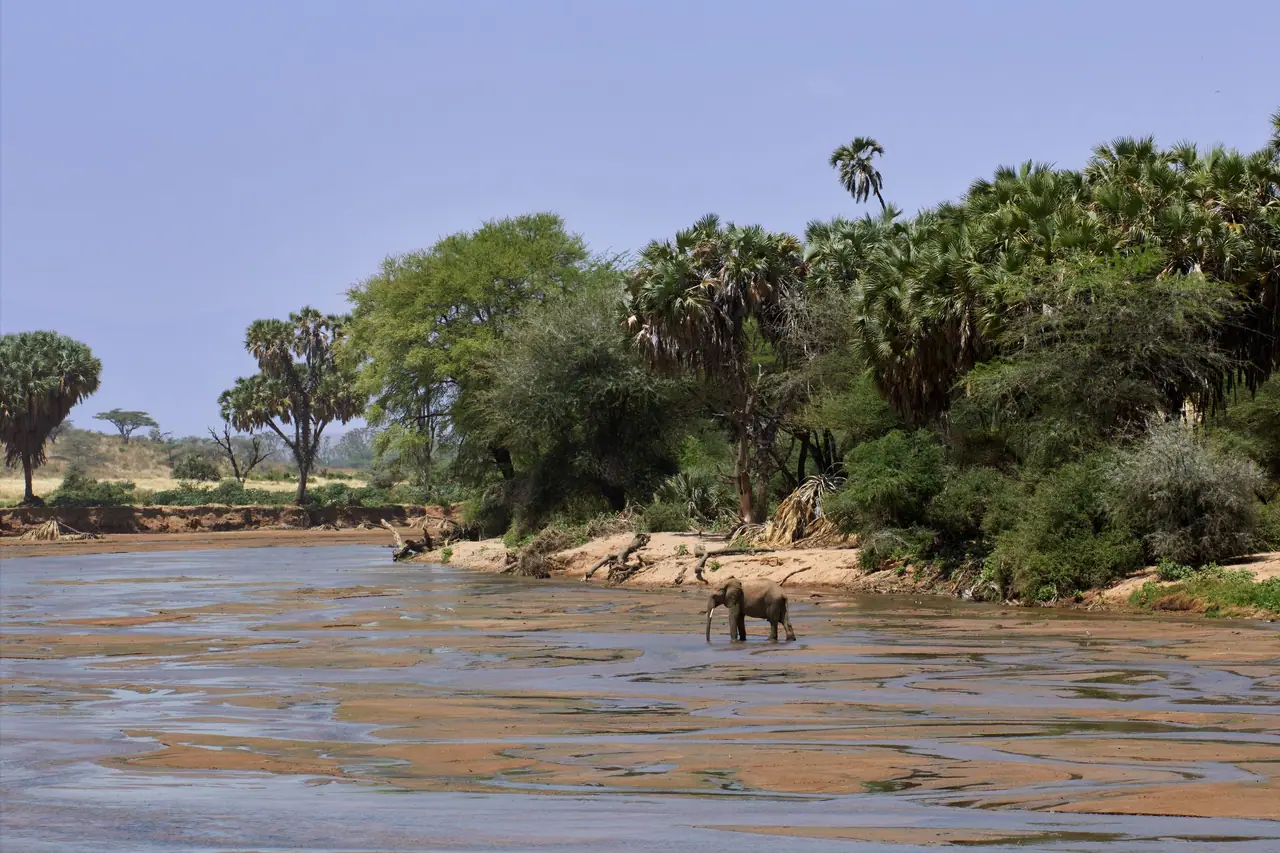
A wilderness the size of Switzerland, explored by boat, on foot, and almost never by crowd.
Selous takes its name from Frederick Courteney Selous, the English explorer and big-game hunter who died here during the East African campaign of the First World War and is buried within its boundaries. Established in 1922 and declared a UNESCO World Heritage Site in 1982, it remains one of the largest protected wilderness areas on the continent — roughly the size of Switzerland.

The Rufiji River is what sets Selous apart from almost every other Tanzanian park: it is one of the very few places in the country where boat safaris are a normal part of the itinerary, gliding past pods of hippo and basking crocodile in numbers few other rivers can match. Walking safaris are permitted here too, a rarer privilege that puts guests on foot in genuine wilderness rather than behind a windscreen.
In 2019 the Tanzanian government split the reserve, converting the northern, tourism-focused section into Nyerere National Park while the remaining southern area kept the Selous name as a hunting concession. Most of the camps and boat safaris travellers know as "Selous" now sit within that renamed northern section, though the Selous name has stuck in how the region is marketed and remembered.
Size
54,600 km²
Best Time to Visit
June – October
Wildlife
African Wild Dog · Hippo · Crocodile · Elephant · Lion
Highlights
Boat safaris along the Rufiji River bring guests close to hippo pods and basking crocodile in one of the only parts of Tanzania where this is a normal part of the itinerary.
Plan This Safari
Our team can arrange every detail of your trip.