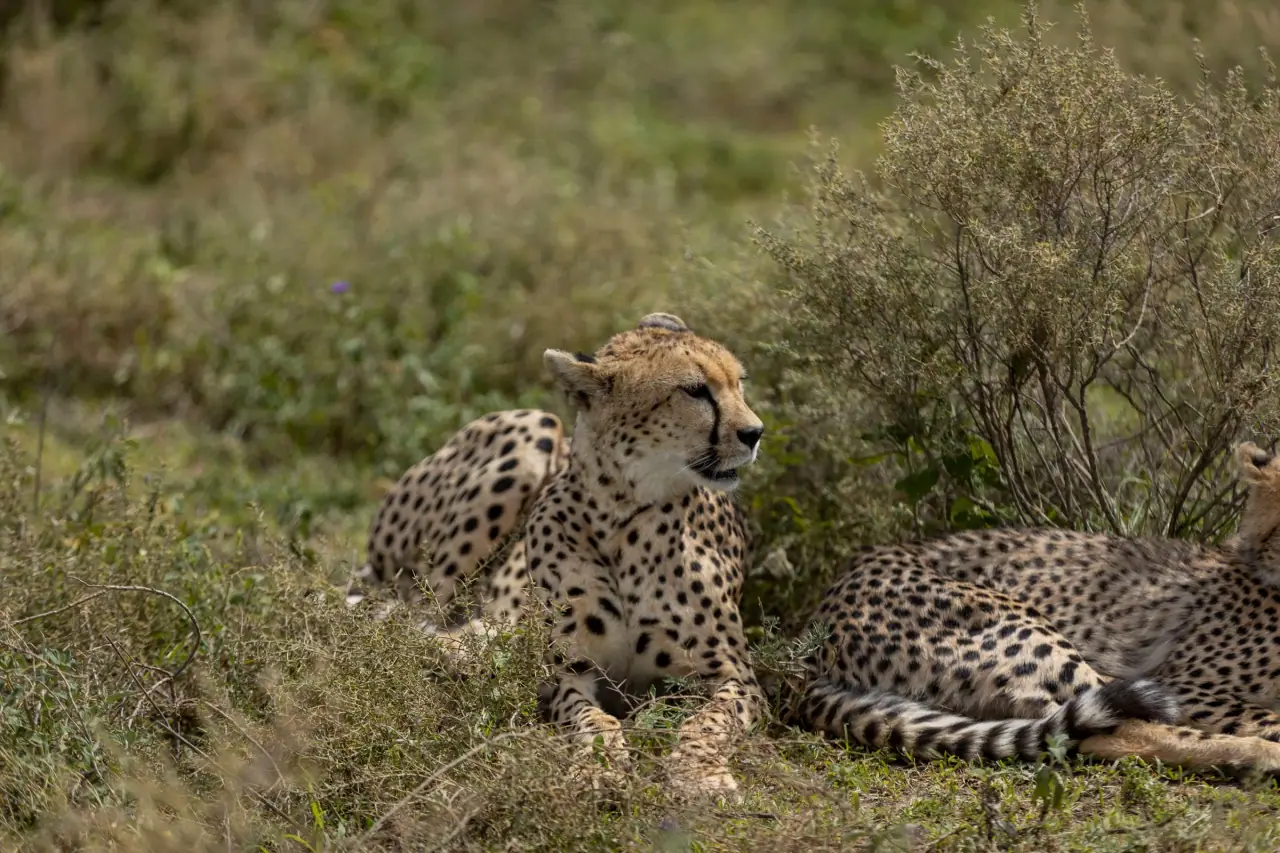
The endless plains where life plays out in full.
The name "Serengeti" comes from the Maasai word Siringet meaning "the place where the land runs on forever." For thousands of years, Maasai pastoralists grazed their cattle across these plains alongside lion, elephant, and wildebeest, developing a coexistence with wildlife that shaped the entire ecosystem.

In 1929, the British colonial government declared the area a partial game reserve, and in 1951 the Serengeti became Tanzania's first national park. The work of naturalists Bernhard and Michael Grzimek whose 1959 film "Serengeti Shall Not Die" won an Academy Award brought the park to global attention and helped establish its final boundaries.
Today the Serengeti is recognised as one of the Seven Natural Wonders of Africa and a UNESCO World Heritage Site. Its 14,763 km² of savanna, woodland, and riverine forest sustain the largest terrestrial mammal migration on earth over 1.5 million wildebeest, 500,000 gazelle, and 200,000 zebra moving in a continuous clockwise circuit in search of rain and grass.
Size
14,763 km²
Best Time to Visit
June – October
Wildlife
Lion · Cheetah · Leopard · Elephant · Buffalo · Wildebeest
Highlights
Over 1.5 million wildebeest move in a continuous clockwise circuit through the Serengeti each year, trailed by lion, cheetah and hyena — one of the last truly wild spectacles left on earth.
Plan This Safari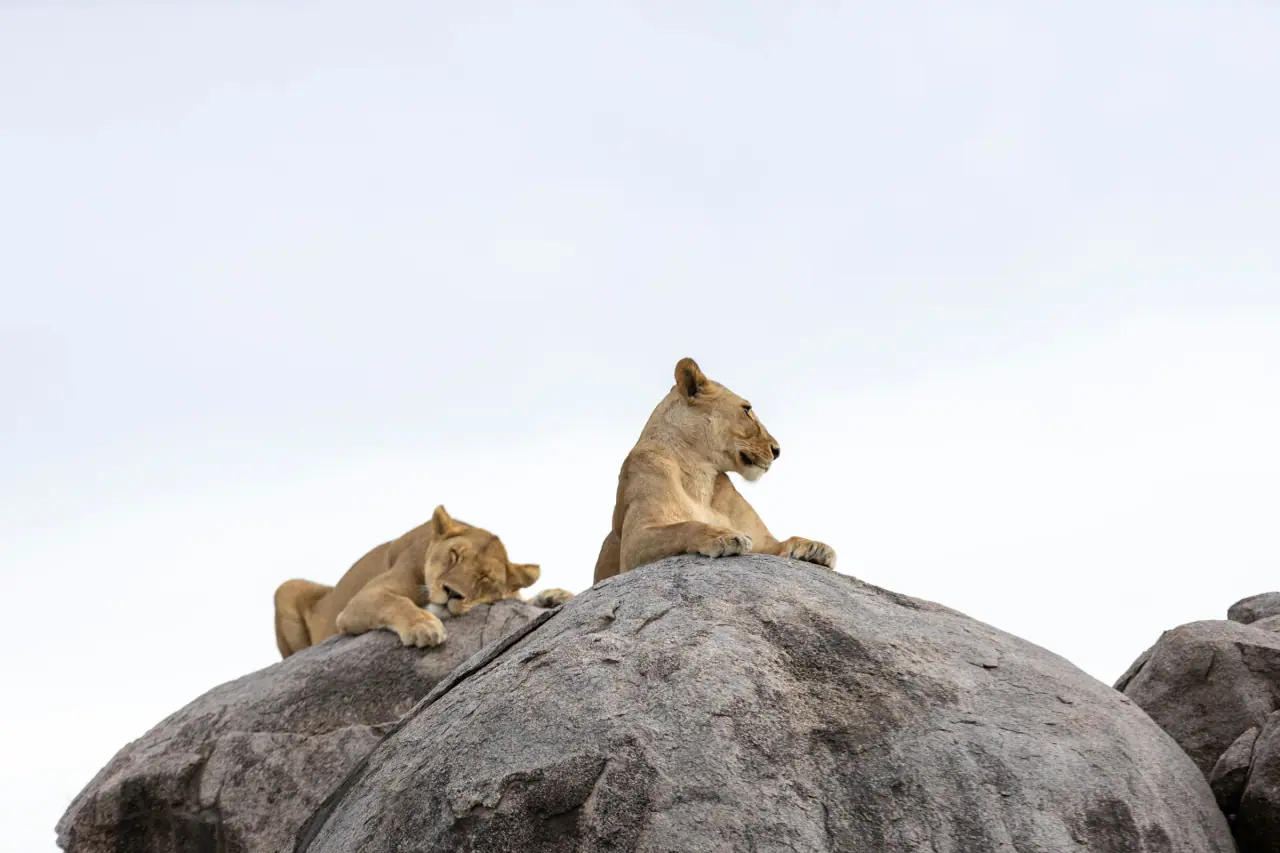
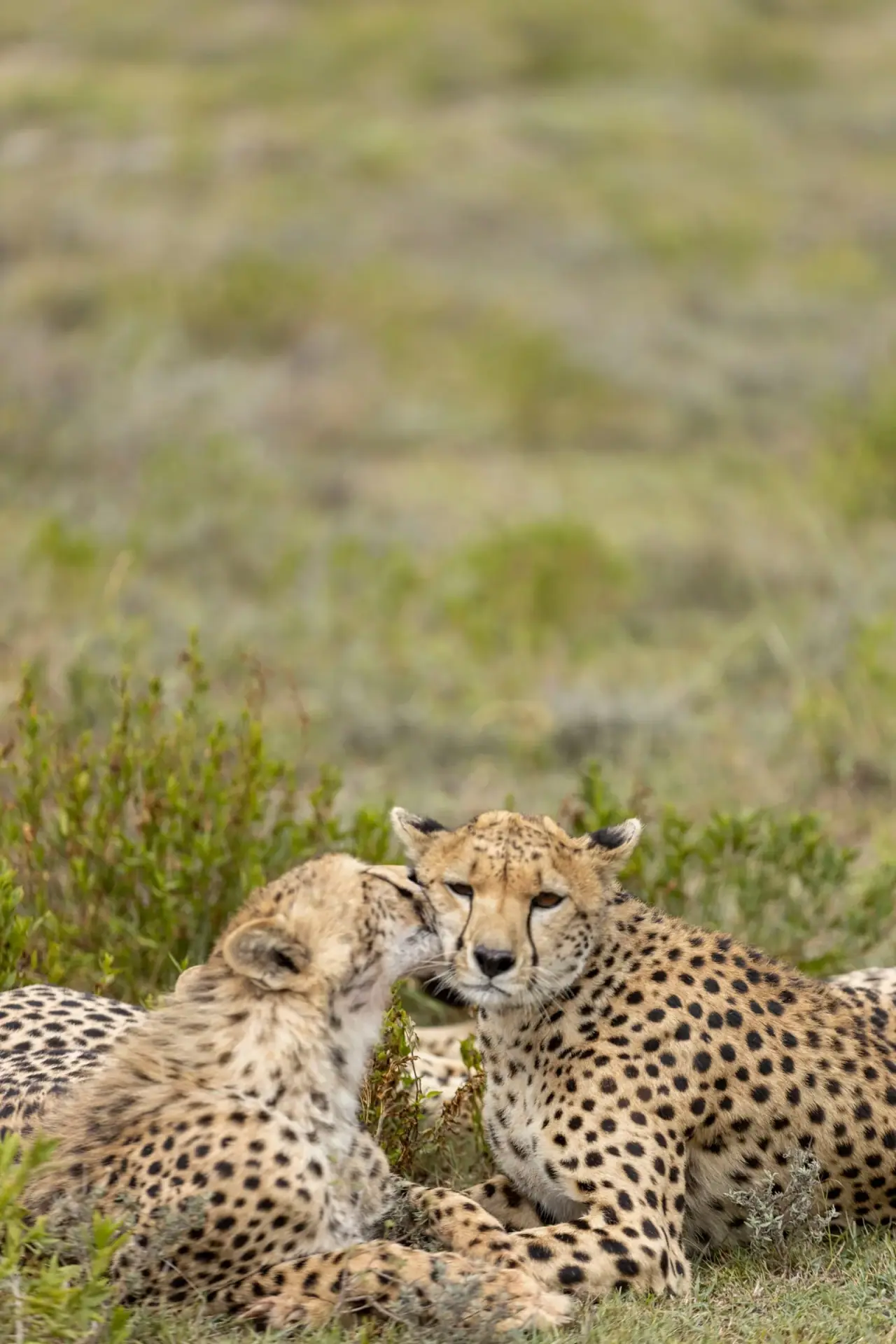
Lion, leopard, cheetah and hyena all share these plains, drawn by the same herds that never stop moving.
"You don't forget the first time a lion looks straight at your vehicle."

Our team can arrange every detail of your trip.